Low-Temp Rosin Curing & Jar-Tech Decarboxylation: Making Liquid Rosin for Vapes vs. Cold-Cure Badder
The exact temperature and time curves inside a PID curing oven (BE-LB-05) to turn freshly pressed live rosin into either whip-ready Cold-Cure Badder, Warm-Cure Sugar Jam, or stable liquid Rosin Vape Oil.
The Practical Reality & Process Physics
Once live rosin leaves the heated platens of the BE-EX-03 20-Ton Press, post-press thermal curing determines its final physical phase and commercial format. Buyers frequently confuse the three post-press curing pathways: (1) Cold Curing for dabbing badder, (2) Warm 'Jar-Tech' Crash Curing for terpene-layered jam, and (3) Sealed Low-Temperature Partial Decarboxylation to turn solid rosin into a flowable liquid for 510 cartridges and postless vape pods.
For Cold-Cure Badder (sold in 1 g concentrate jars dosed via BE-LB-10), sealed jars rest at 15 C to 21 C for 72 hours until THCA nucleates into a uniform opaque paste that is whipped once before jarring. For Warm-Cure Jam, sealed jars are heated on the direct-conduction shelves of the BE-LB-05 PID Oven at 95 C for 30 minutes until clear, then held at 55 C for 48 hours to crash faceted THCA micro-diamonds beneath a golden terpene layer.
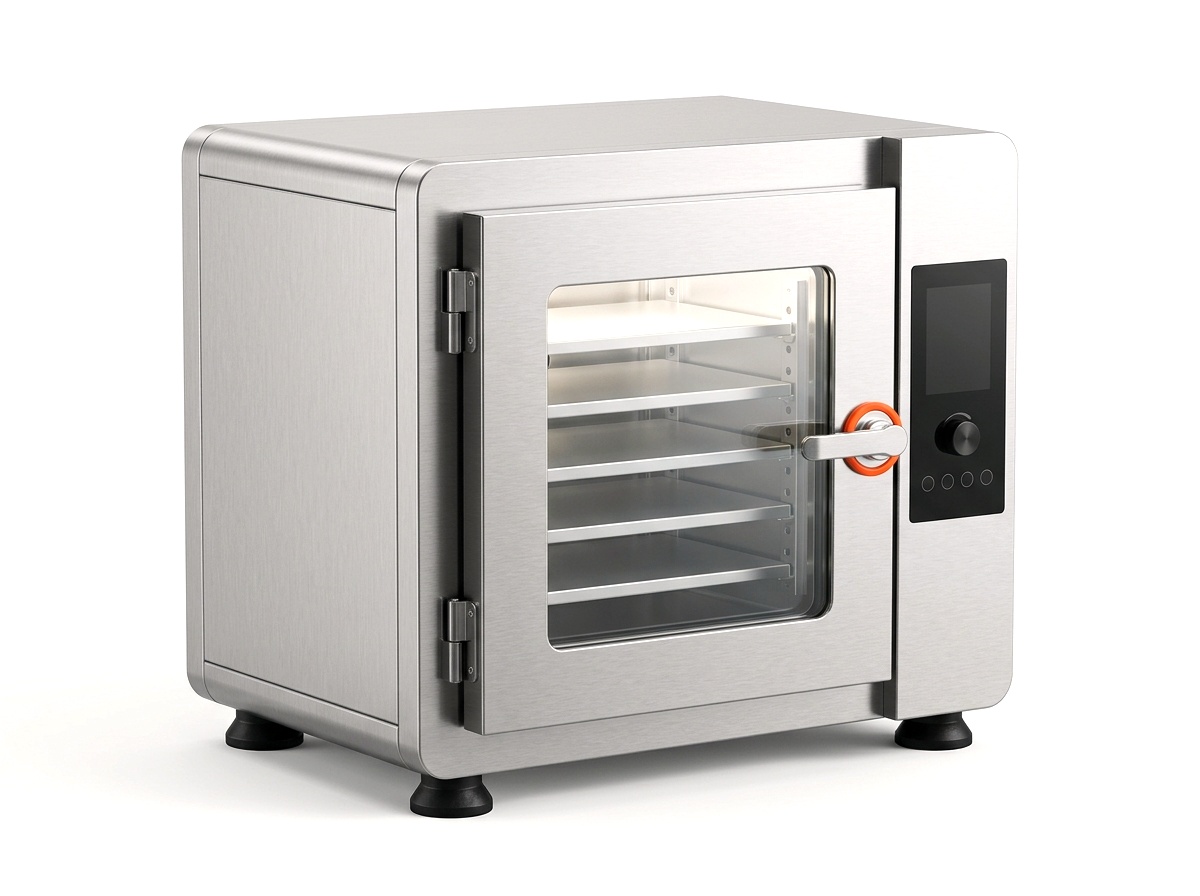
For Live Rosin Vape Cartridges and Postless Pods, crystallization must be prevented rather than encouraged. By holding sealed heavy-wall borosilicate jars in the BE-LB-05 5-Shelf PID Oven at 65 C to 90 C for 24 to 48 hours (or 105 C for 3 to 4 hours on low-terpene flower rosin), enough THCA converts into liquid delta-9 THC to disrupt crystal lattice formation permanently. Once the foam layer collapses into a glassy amber liquid, cool the sealed jar to 40 C so headspace terpenes condense back into the oil before transferring into the BE-VF-28 heated gantry filler.
Reference Operating Window & Numbers
| Parameter | Specification |
|---|---|
| Cold-Cure Badder Temp | 15 C - 21 C for 48-96 Hours (Jar Dab Format) |
| Warm Jam / Crash Cure | 95 C (30 min) -> 55 C for 48-72 Hours |
| Vape Oil Jar-Tech Cure | 65 C - 90 C for 24-48 Hours in BE-LB-05 PID Oven |
| Shelf Temp Uniformity | +/- 0.5 C Direct-Heated Aluminum Shelves |
Step-by-Step: How to Do It Right on the Floor
Step 1: Define Your Material & Target Spec (Cold-Cure Badder Temp: 15 C - 21 C for 48-96 Hours (Jar Dab Format))
Before touching a machine switch, measure your starting material and target container or batch geometry. In this workflow, holding Cold-Cure Badder Temp within 15 C - 21 C for 48-96 Hours (Jar Dab Format) is the difference between a repeatable commercial run and a batch you have to rework by hand. Log your viscosity, moisture content, or dimensional tolerance on a single batch sheet before warming up the line.
Step 2: Lock Your Thermal & Mechanical Envelope (Warm Jam / Crash Cure: 95 C (30 min) -> 55 C for 48-72 Hours)
Set your PID temperature controllers, pressure regulators, or screen clearances to stabilize at 95 C (30 min) -> 55 C for 48-72 Hours for at least 15 minutes before feeding product. Cold stainless steel steals heat from the first 50 units; letting the manifold or jacketed wall reach thermal equilibrium ensures unit #1 and unit #1,000 behave identically.
Step 3: Run a Dry & Wet Calibration Pass (Vape Oil Jar-Tech Cure: 65 C - 90 C for 24-48 Hours in BE-LB-05 PID Oven)
Never launch a full shift blindly. Run a 10-unit or 5-liter calibration check at your target cadence (65 C - 90 C for 24-48 Hours in BE-LB-05 PID Oven), weigh the output on a 0.01 g analytical balance, and inspect seals, trichome integrity, or droplet dispersion under bright white light.
Step 4: Close the Loop Within the Critical Window (Shelf Temp Uniformity: +/- 0.5 C Direct-Heated Aluminum Shelves)
Complete downstream sealing, curing, filtration, or nitrogen packaging while your product is still inside the optimal physical window (+/- 0.5 C Direct-Heated Aluminum Shelves). Clean contact parts immediately at shift end while residues are still warm so tomorrow's batch starts with zero cross-contamination.
Comparing All Your Options: What Exists & What Fits Your Scale
| Option / Approach | Realistic Daily Output | Where It Shines (Pros) | Where It Hurts (Limits & Trade-offs) | Who Should Choose This |
|---|---|---|---|---|
| Manual Heated Glass Syringe / Hand-Trigger Gun | 300 - 800 units / day | Lowest cost; quick flavor switches for 50-unit sample runs. | Severe wrist fatigue; shot weight drifts +/- 5% as the barrel cools; slow manual capping causes chimney flooding. | R&D sampling or micro-batches under 1,000 units per week. |
| Single-Nozzle Benchtop Heated Filler (BE-VF-15 / BE-VF-27) + Manual Arbor Press | 2,000 - 4,500 units / day | Digital servo dosing (+/- 0.5%) with heated reservoir and needle; fast 10-minute terpene changeover. | Operator still indexes one tray row by hand; capping is a separate manual lever stroke. | Single-operator labs producing 5,000 to 15,000 cartridges per week across multiple strains. |
| 5-Channel Heated CNC Gantry (BE-VF-28) + 100-Cavity CNC Aluminum Trays + 100-Unit Platen/Torque Capper (BE-VC-29 / BE-VC-30) | 15,000 - 28,000 units / day (3,600/hr) | Fills 100 cartridges in 70 seconds (5 needles at once); shared CNC aluminum tray transfers directly into the 100-cavity capper within the 90-second anti-leak window. | Requires custom CNC aluminum trays milled to your device CAD (+/- 0.02 mm). | Commercial processors running 15,000 to 100,000+ units per week who want zero leaks and 1-operator efficiency. |
| Fully Automated Rotary Monoblock (Auto-Feeder + Fill + Cap + Label) | 35,000+ units / day | Unattended continuous feed for a single locked hardware SKU. | Takes 4-6 hours to re-tool if you change pod shapes; 4x higher capital cost. | High-volume co-packers running millions of identical 510 carts with zero hardware changes. |
How to Decide: The 4 Critical Decision Points Before You Buy
1. Calculate Your Real Weekly Volume vs. Labor Cost
Do not buy automation for ego, and do not stay manual out of habit. If two operators spend more than 12 hours a week repeating this step by hand, or if scrap/giveaway exceeds 3%, semi-automatic or turnkey equipment pays for itself in 6 to 14 weeks.
2. Match the Machine to Your Hardest Material (15 C - 21 C for 48-96 Hours (Jar Dab Format))
Anyone can run thin, warm liquids or bone-dry trim. Size and choose your equipment for your most demanding product — whether that is un-cut live rosin, sticky resinous flower, or -40 C solvent washes requiring 95 C (30 min) -> 55 C for 48-72 Hours.
3. Check Format Changeover Time Before You Buy
If your facility runs five different SKUs or strains a day, a rigid rotary line that takes 4 hours to re-tool will sit idle. Choose modular equipment where trays, screens, or fluid paths swap in under 15 minutes.
4. Demand Proof Before Shipment (Unedited 4K FAT)
Never wire final balance payments on brochure promises. Insist on seeing your exact hardware (BE-LB-05, BE-EX-03, BE-LB-10, BE-VF-28) running your device CAD and facility voltage in an unedited 4K test video before the crate leaves the factory.
Expensive Mistakes Operators Make (and How to Avoid Them)
Ignoring Thermal & Pressure Drift (Cold-Cure Badder Temp)
Allowing Cold-Cure Badder Temp to drift outside 15 C - 21 C for 48-96 Hours (Jar Dab Format) mid-shift causes immediate viscosity spikes, terpene evaporation, or seal failure. Always use closed-loop PID control rather than manual dial rheostats.
Buying Oversized or Undersized Upstream Prep
A fast machine starved by slow upstream prep — or bottlenecked by slow manual capping/drying downstream — never hits 65 C - 90 C for 24-48 Hours in BE-LB-05 PID Oven. Balance every step of the cell to the same hourly rhythm.
Skipping Rigid Tooling or Sanitary Connections
Using soft shipping foam, uncalibrated silicone hoses, or non-sanitary threads introduces 95 C (30 min) -> 55 C for 48-72 Hours alignment errors and microbial traps. Stick to 304/316L stainless steel and CNC-milled 6061-T6 aluminum fixtures.
Questions Buyers & Operators Ask Most
Why must I cool the sealed rosin jar below 40 C before opening it after oven curing?
At 70 C - 90 C, volatile monoterpenes (myrcene, limonene, pinene) exist as pressurized vapor in the jar headspace. Opening the lid while hot vents those aromatics instantly; cooling to 40 C condenses them back into the liquid rosin.
When should we stay manual vs. upgrading to BE-LB-05, BE-EX-03, BE-LB-10, BE-VF-28?
If you are running small R&D tests once a month, manual tools are fine. The moment you need repeatable 65 C - 90 C for 24-48 Hours in BE-LB-05 PID Oven output, consistent 95 C (30 min) -> 55 C for 48-72 Hours precision, and single-operator labor efficiency without batch-to-batch drift, upgrading to BE-LB-05, BE-EX-03, BE-LB-10, BE-VF-28 eliminates the bottleneck.
Can we buy just one machine now and add the rest of the line later?
Yes. Every module (BE-LB-05, BE-EX-03, BE-LB-10, BE-VF-28) is built to operate standalone on standard facility utilities (+/- 0.5 C Direct-Heated Aluminum Shelves) while sharing the same 100-cavity tray geometry and sanitary Tri-Clamp standards when you scale.
If You Are Building This Line: Matched Modular Equipment
Only after your process and daily volume are clear should you pick hardware. Here are the modules engineered for this exact workflow.
| SKU | Machine | Throughput | 1-Unit (EUR) | Action |
|---|---|---|---|---|
| BE-LB-05 | 5-Shelf Digital PID Heated Vacuum Purge & Curing Oven | 53 L / 91 L / 215 L chamber volume | EUR 1,350 | Cart |
| BE-EX-03 | 20-Ton Dual-PID Pneumatic Rosin Press | 20 - 30 Tons Pressing Force | EUR 1,450 | Cart |
| BE-LB-10 | Sanitary Ceramic Piston Lab & Pilot Jar/Syringe Dosing Machine | 600 - 1,500 doses/hr | EUR 2,200 | Cart |
| BE-VF-28 | 5-Needle Heated CNC Gantry Filler | 3,600 - 5,400 pcs/hr | EUR 7,200 | Cart |
What to Read Next
Solventless Bubble Hash Freeze-Drying & 20-Ton Rosin Press Sizing: Preserving Monoterpenes
How pharmaceutical lyophilization (BE-LB-02), dual-PID 20-ton platen pressing (BE-EX-03), and vacuum curing ovens (BE-LB-05) prevent trichome oxidation and preserve blonde live rosin color.
Ultimate Guide: How to Make Live Rosin Vape Carts & Postless Pods (From Ice-Water Hash to Capped Pod)
The complete 5-stage commercial engineering workflow for solventless live rosin vapes: jacketed ice-water hash washing (BE-EX-06), lyophilization (BE-LB-02), 20-ton PID pressing (BE-EX-03), low-temp Jar-Tech THCA melting (BE-LB-05), and heated CNC pod filling (BE-VF-28).
Commercial Ice-Water Bubble Hash Washing Guide: Vortex Agitation, Water Ratios & Micron Sieve Selection
How to size and operate a sanitary jacketed ice-water hash washing vessel (BE-EX-06) with 6-tier stainless steel micron sieves to separate intact 73u-159u trichome heads without chlorophyll bleed.